

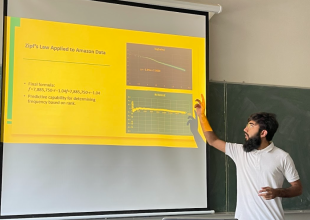
When Basit’s mother could not pursue a bachelor’s degree because she struggled to pass English, she made a different promise: her son would have the education she could not have.
She enrolled Basit in an English-medium school that she could barely afford and made sacrifices to keep him there. From Grade 9 onwards, he relied on merit scholarships to continue his education. Mathematics came naturally to him, and when his parents encouraged him to pursue medicine, he chose a different path, not out of defiance, but because he knew where his interests lay.
There was, however, a practical question: how would he afford university?
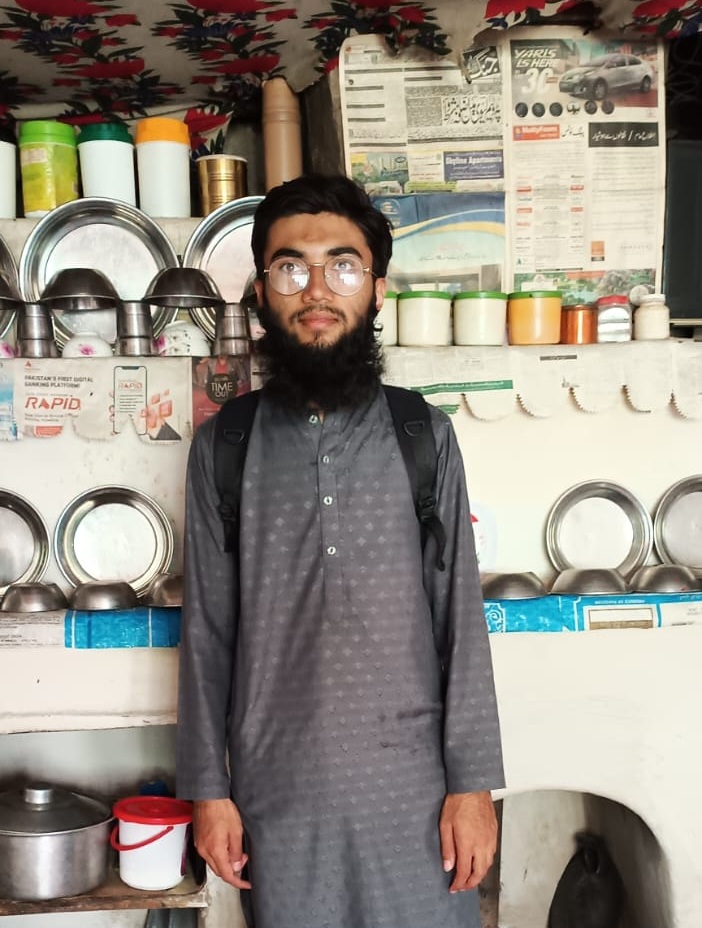
The answer came through LUMS’ National Outreach Programme (NOP).
Basit applied and was invited to the NOP Summer Coaching Session. Those two weeks became a turning point, not only academically but personally. The experience strengthened his communication skills, broadened his confidence, and, most importantly, made him believe that LUMS was a place where he could belong.
Finding His Place at LUMS
Arriving at LUMS, Basit initially felt isolated. Rather than allowing that feeling to define his experience, he began looking for ways to contribute.
He spent a year training with LUMS Emergency Medical Services (EMS), followed by two years as a Medical First Responder, volunteering around 10 hours each week. At SBASSE, he was drawn to the emphasis on hands-on learning and took the Sophomore Design Studio, where he explored the mechanics behind everyday structures.
Outside the classroom, mathematics continued to shape his journey in unexpected ways.
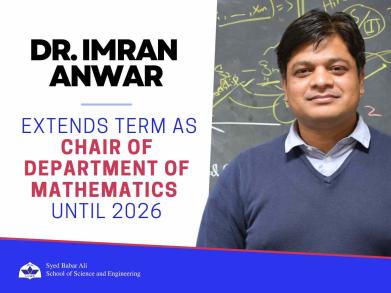
Basit volunteered with Math Circles, supporting Dr Imran Anwar in teaching children mathematics through fun and interactive activities. But each session taught him something too. He began to realise that teaching mathematics was not simply about explaining concepts; it was about understanding how people learn.
His LUMS experience extended well beyond academics. A summer exchange in Skardu connected him with students from the humanities at LUMS, where informal philosophy discussions challenged him to think beyond the frameworks of science and grades.
These experiences taught him patience, empathy and the ability to see people beyond their academic performance.
Campus Ideas & Entrepreneurship
His undergraduate years also brought experimentation, uncertainty and entrepreneurship.
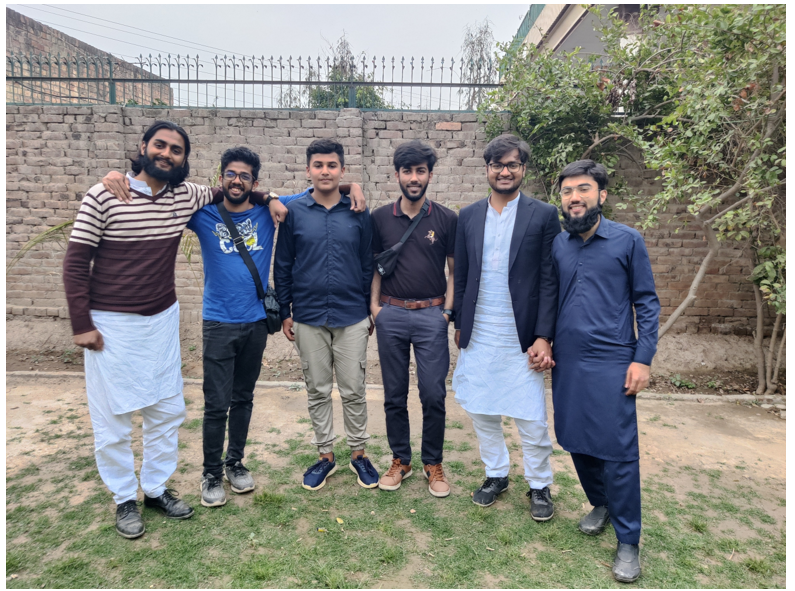
When a friend started DormDrop, Basit became its first food delivery rider on campus. The idea eventually gained Student Council support. Today, according to Basit, DormDrop has delivered more than 50,000 orders and generated over PKR 10 million in delivery fees for students facing financial constraints.
He also co-founded YODO, a bike-rental startup that was later incubated at NIC Islamabad. During his final year, Basit also founded an online mathematics academy alongside his studies and startup work.
2.88 and Fulbright??
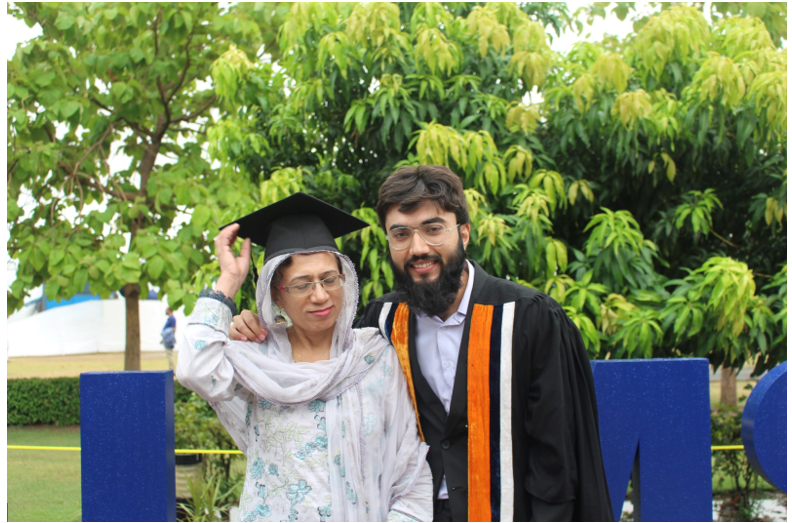
After graduation, Professor Sultan Sial from his department encouraged him to apply for the Fulbright Scholarship, Basit was initially unsure. With a CGPA of 2.88, he was applying to programmes where the stated minimum was sometimes 3.5.
With guidance from Professor Sial and support from LUMS Career Services, he learned to look beyond the number on his transcript and recognise the value of his broader experience in teaching, research, volunteering and entrepreneurship.
He applied, and was selected for the Fulbright Scholarship.
His journey is a reminder that a GPA is part of a student’s story, but it does not have to define the whole story.
From an NOP student wondering whether he could belong at LUMS to an alumnus heading abroad as a Fulbright Scholar, Basit’s journey has been anything but linear.
And perhaps that is the lesson he most wants future students to take from it:
“Don’t let your GPA define your potential. Learn the rules of the system so you can navigate them strategically. And never forget where you came from.”
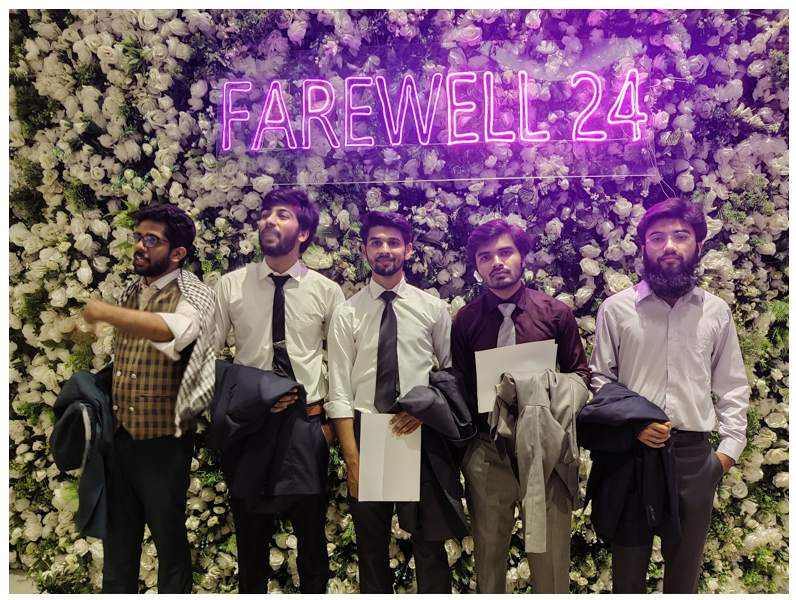
Watch Abdul Basit's Video Messege Here