


LUMS Team Wins Pakistan’s First National Quantum Hackathon
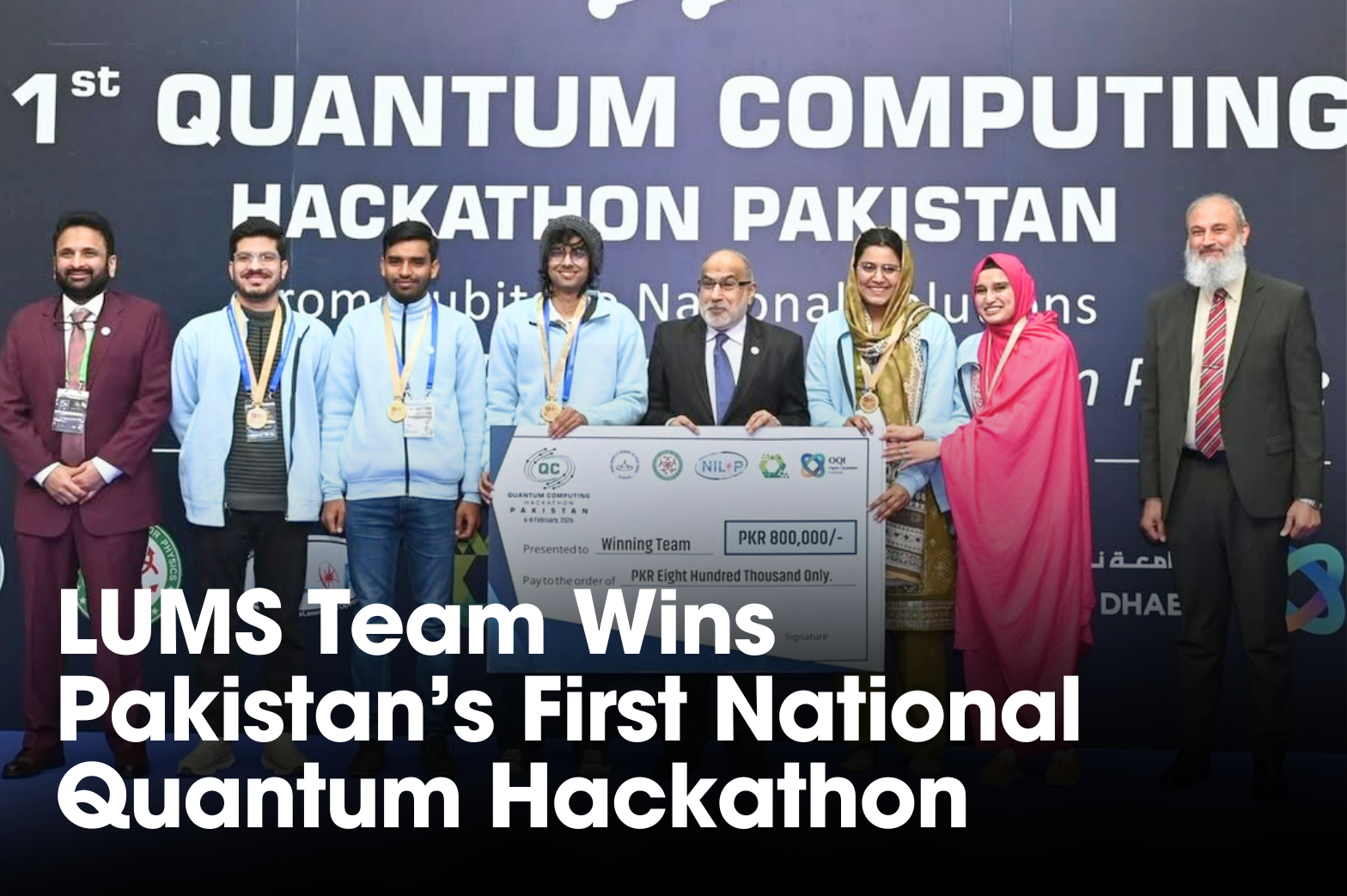
A LUMS-led team has secured first place at Pakistan’s first-ever national quantum hackathon, marking a significant milestone for the country’s quantum ecosystem and for SBASSE’s growing footprint in frontier technologies.
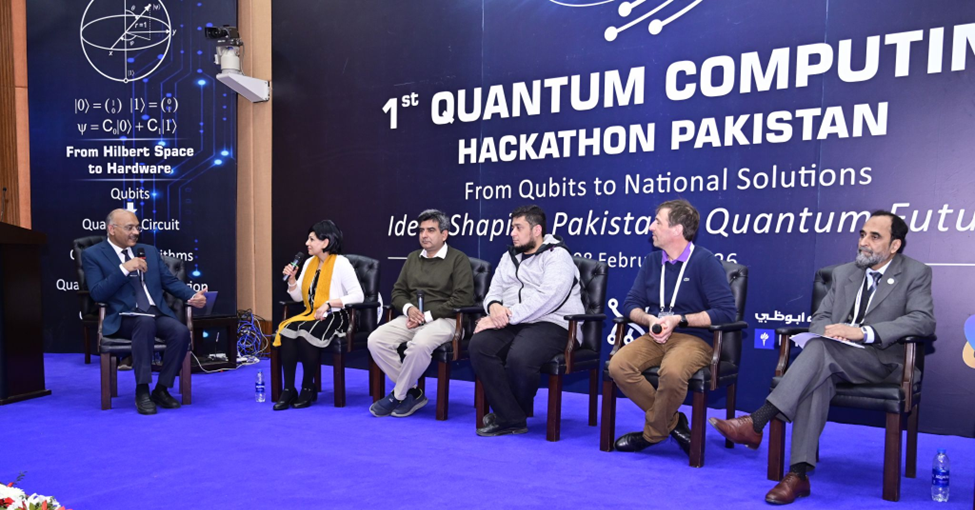
The hackathon was organized to celebrate 100 years of quantum mechanics and was hosted by Pakistan Institute of Engineering and Applied Sciences (PIEAS), Nilore Institute of Nuclear Physics (NILOP), and the National Centre for Physics (NCP). Major collaborators included the Open Quantum Institute (OQI) at CERN, New York University Abu Dhabi, the Geneva Science and Diplomacy Anticipator (GESDA), the National Centre for Quantum Computing (NCQC), Lahore University of Management Sciences (LUMS), and the Emerging Technologies Lab.
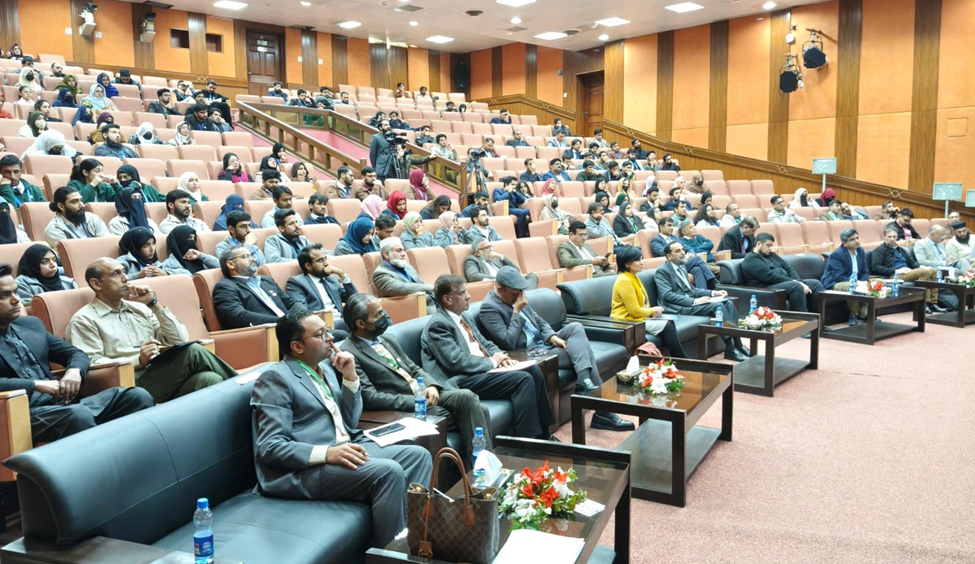
The response was overwhelming, with nearly 1,000 applicants from across Pakistan. After a competitive shortlisting process, 90 participants advanced to an intensive preparatory course led directly by OQI at CERN. Following quizzes and graded assignments, 42 finalists were selected and divided into seven cross-institutional teams — intentionally designed to bring together talent from LUMS, NUST, PIEAS, GIKI, QAU and other leading universities
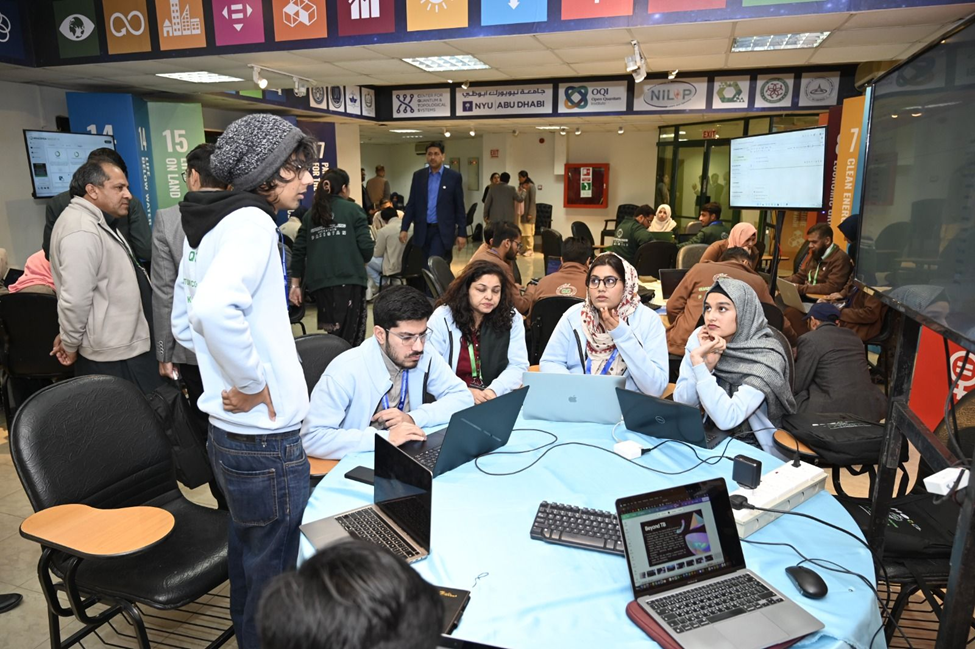
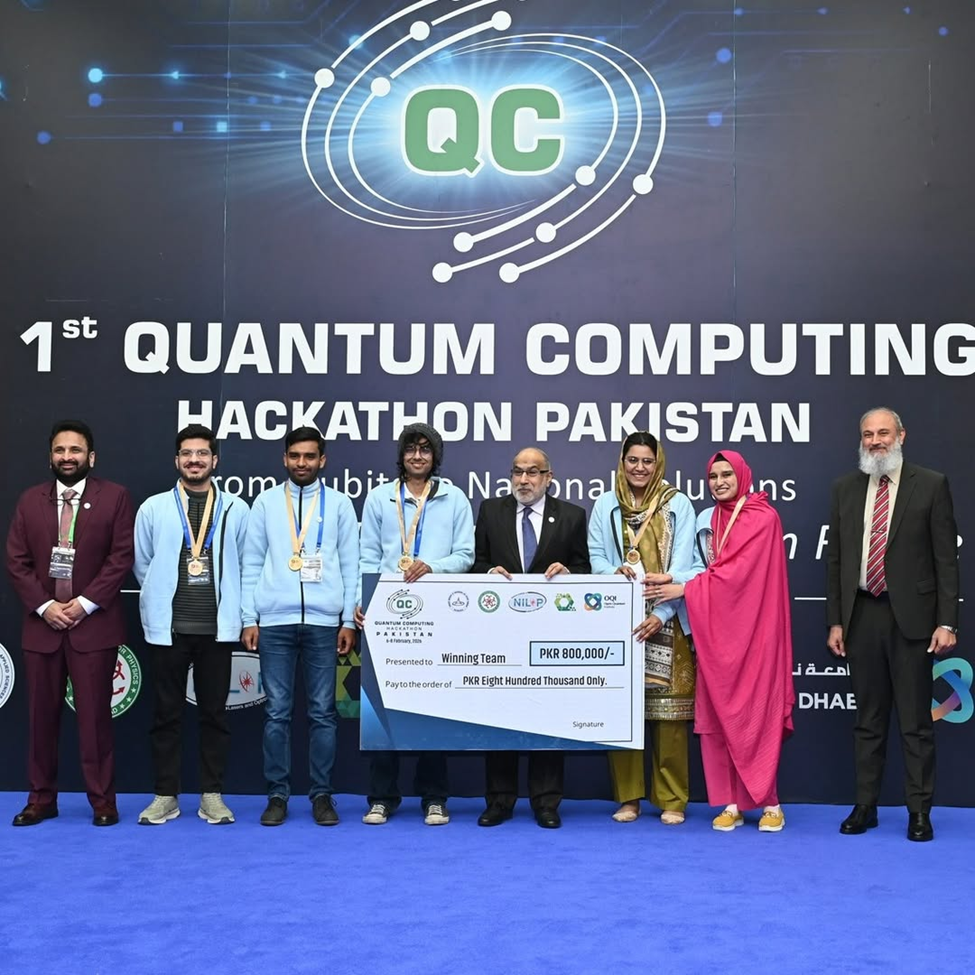
Held from 6–8 February, the three-day hackathon challenged teams to conceptualize, build, and pitch a complete quantum-driven solution aligned with the UN Sustainable Development Goals (SDGs). Focus areas included Health & Well-Being, Quality Education, Gender Equality, Clean Water & Sanitation, Clean Energy, Economic Growth, Climate Action, and Life on Land. The competition was awarded PKR 800,000 for first place, PKR 600,000 for second, and PKR 400,000 for third.
A Winning Team from LUMS
Leading the first-place team was a LUMS undergraduate Muhammad Daniyal from SBASSE. The team also included Maham Shehzadi (master’s student at National University of Sciences and Technology), Ubaid ur Rehman (master’s student at the University of Southern California), Muhammad Ahmed (master’s student at NILOP), and Dur e Adan (undergraduate student at PIEAS). Together, the cross-institutional group combined complementary strengths in physics, computation, and applied machine learning.
The team chose to address one of Pakistan’s most pressing public health challenges: Tuberculosis (TB) diagnosis. They developed a hybrid Quantum Convolutional Neural Network (QCNN) for anomaly detection in chest X-rays, combining classical deep learning with quantum circuits. Their model was trained and tested on a local Pakistani TB chest X-ray dataset, ensuring contextual relevance.
In resource-constrained healthcare environments, access to large, high-quality datasets is a major challenge. Traditional AI systems typically rely on vast amounts of data to achieve high accuracy. Quantum machine learning, however, can uncover complex patterns from comparatively smaller datasets. The team demonstrated that their hybrid QCNN outperformed a fair classical baseline even under severe data limitations — underscoring the potential of quantum technologies for real-world healthcare applications in Pakistan.
Mentorship and LUMS Representation
The team acknowledged the mentorship of Dr. Aeysha Khalique and Dr. Muhammad Faryad from the Department of Physics as central to their success. They shared that the mentors played a vital role in shaping the direction of the project, refining the pitch, and sustaining team morale throughout the intense three-day sprint. Accessible at all hours — often staying up late alongside the team — their guidance and encouragement proved invaluable.
LUMS was further represented at the national level through the participation of Muhammad Sabieh Anwar, Professor of Physics at SBASSE. Prof. Anwar served on the hackathon’s panel of national and international judges and also delivered a talk during the event, contributing academic depth to the proceedings. His presence underscored LUMS’ broader engagement with Pakistan’s evolving quantum landscape — not only through student excellence but also through scholarly leadership.
This achievement reflects both the strength of LUMS students in frontier research domains and SBASSE’s commitment to advancing quantum innovation with tangible societal impact. As Pakistan marks a century of quantum mechanics, LUMS is actively shaping what its next century could look like.
Watch National Quantum Hackathon Highlights Here
(Video courtesy of: Azaad Digital)