


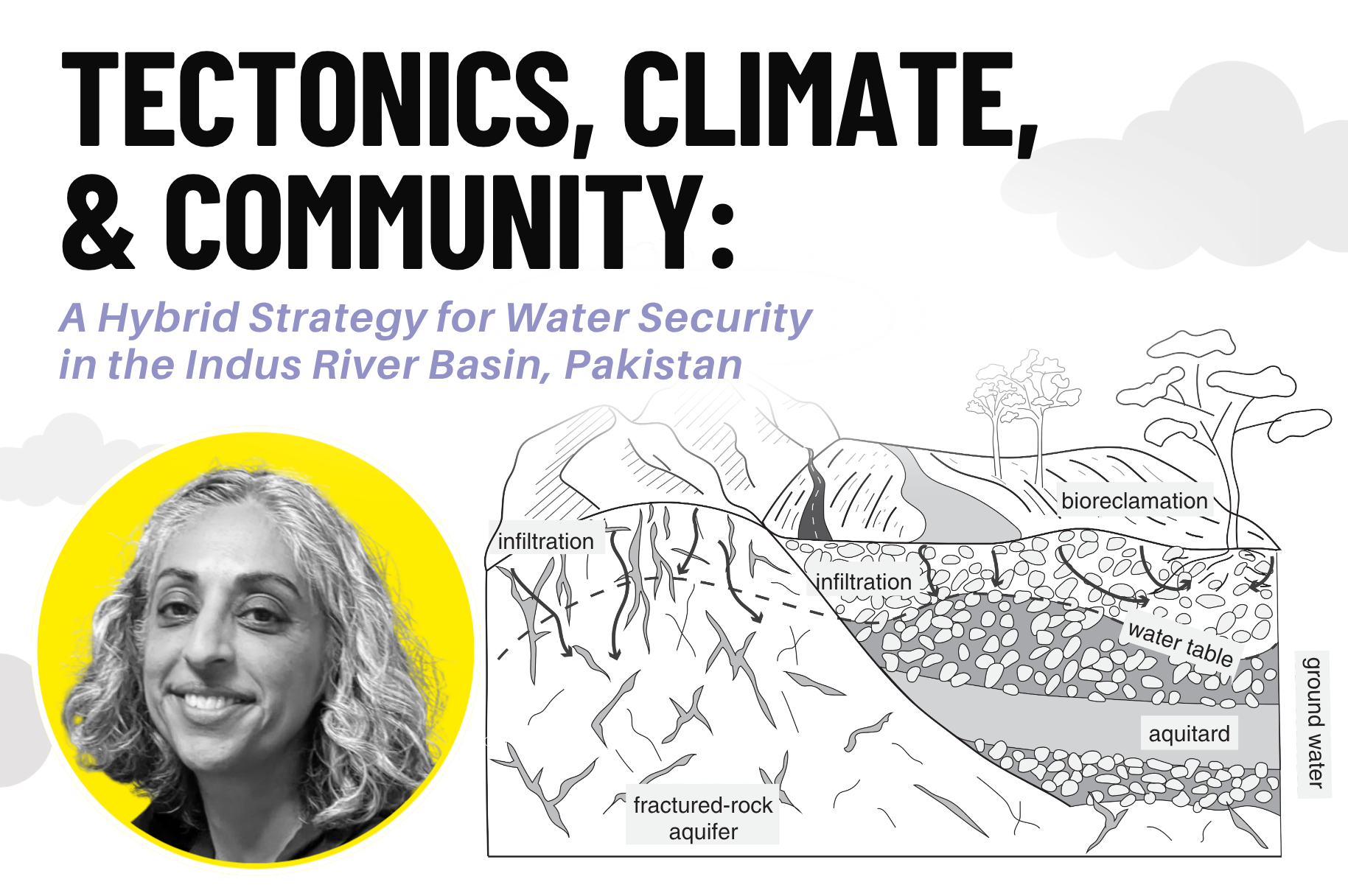
Tectonics, Climate, and Community: A Hybrid Strategy for Water Security in the Indus River Basin, Pakistan
Water insecurity is a critical, often overlooked underlying cause of regional instability. Pakistan is extremely water-stressed and, predictably, faces increasing instability. We propose a two-pronged approach to address water insecurity in Pakistan: accessing fresh water from subsurface fractures and adopting community-led, sustainable water management.
The Indus River Basin (IRB) is Pakistan’s primary water source. Groundwater is being overexploited from IRB aquifers to compensate for depleting surface water supplies. This has led to increased soil salinization and arsenic concentrations, thereby limiting food production and posing serious risks to public health.
The IRB is largely fed by mountain glaciers, which are rapidly melting due to climate change, as well as monsoonal rains that are becoming increasingly erratic and intense. At the same time, the mountains are actively rising, with much of this uplift accommodated by crustal fractures. We suggest that excess glacial melt and monsoonal rainfall may be stored within these fractures. However, fractured-rock reservoirs remain largely unexplored in Pakistan.
To ensure sustainability, we propose accessing fractured-rock aquifers alongside community-led traditional conservation techniques. These approaches are often more resilient to natural calamities while promoting regeneration and long-term preservation. This bottom-up strategy empowers communities to adapt through informed, local decision-making.
This hybrid approach is both holistic and scientifically grounded. It addresses climate-induced water redistribution through community engagement, offering a viable alternative to top-down, costly, and often over-engineered solutions.